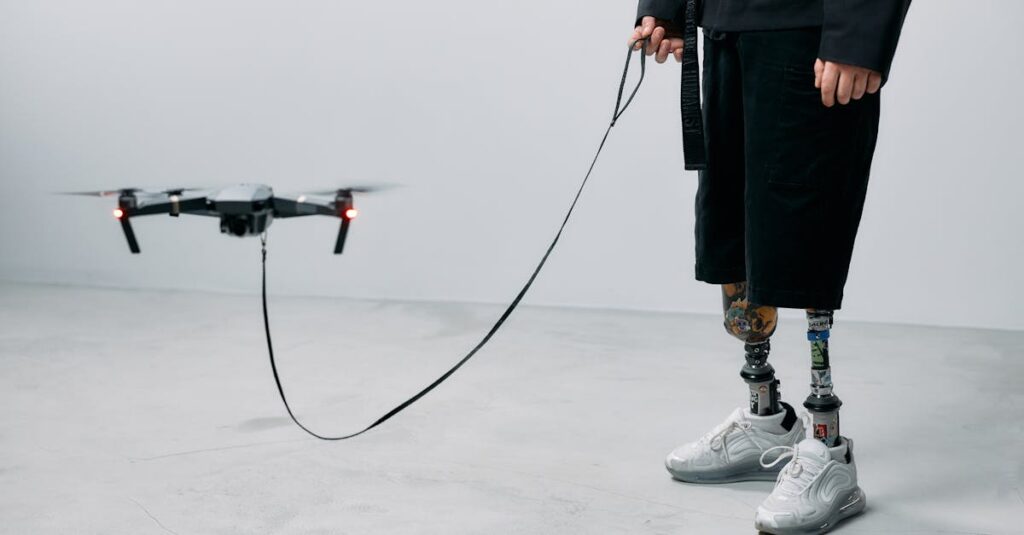
Imagine a battlefield where silent guardians patrol the skies, equipped with cutting-edge technology that anticipates every move. Futuristic military drones are transforming warfare, blending intelligence with agility in ways once thought impossible. These high-tech marvels don’t just fly; they strategize, adapt, and execute missions with precision that rivals human counterparts.
As nations race to innovate, the next generation of drones promises enhanced stealth, autonomous decision-making, and unparalleled efficiency. From surveillance to combat, these aerial warriors are set to redefine the landscape of modern defense. Dive into the world of futuristic military drones and discover how they’re shaping the future of global security with a perfect mix of sophistication and flair.
Overview of Futuristic Military Drones
Futuristic military drones signify a leap forward in defense technology. These drones incorporate artificial intelligence, enabling autonomous target identification and engagement with exceptional accuracy. Enhanced stealth features minimize detection by enemy radar systems, ensuring covert operations. Advanced sensors coupled with real-time data processing allow drones to navigate and adapt to rapidly changing combat scenarios effectively.
Countries are heavily investing in swarm technologies, which enable multiple drones to coordinate seamlessly during missions. This collaboration increases mission efficiency and coverage area. Additionally, integrating renewable energy sources extends drones’ operational range and endurance, reducing the need for frequent recharging or refueling.
Quantum communication technology ensures secure and instantaneous data transmission between drones and command centers, safeguarding sensitive information. Facial recognition and biometric analysis capabilities enhance intelligence-gathering efforts, providing detailed insights during missions. Modular designs facilitate rapid upgrades and customization, allowing drones to meet evolving military requirements swiftly.
Autonomous decision-making systems reduce the reliance on human operators, speeding up response times in critical situations. The incorporation of advanced materials makes drones more durable and resistant to harsh environments, increasing their reliability in various combat conditions. Moreover, these drones are equipped with precision-guided munitions, which improve targeting accuracy and minimize collateral damage.
Investment in these cutting-edge technologies offers strategic advantages, potentially transforming modern warfare dynamics. As nations continue to develop and deploy these advanced systems, the role of military drones in ensuring national security becomes increasingly pivotal. The continuous innovation in drone technology promises to enhance their effectiveness and operational capabilities, reinforcing their position as essential tools in contemporary and future military operations.
Advanced Technologies in Military Drones
Military drones leverage cutting-edge technologies to enhance their operational effectiveness and strategic advantage.
Artificial Intelligence Integration
Artificial intelligence drives autonomous target identification and engagement in modern military drones. These systems analyze real-time data to distinguish between hostile and non-hostile targets with high accuracy. Machine learning algorithms enable drones to adapt to evolving combat environments, improving decision-making speed and precision. AI-powered navigation systems allow drones to maneuver through complex terrains and urban settings seamlessly. Additionally, predictive analytics forecast potential threats, allowing preemptive actions. Swarm intelligence coordinates multiple drones to execute synchronized missions, increasing mission success rates. Facial recognition and biometric analysis facilitate advanced intelligence-gathering capabilities, identifying key personnel. Autonomous systems reduce the need for constant human oversight, decreasing response times and operational costs. By integrating AI, military drones achieve greater autonomy, efficiency, and effectiveness on the battlefield.
Enhanced Stealth Capabilities
Enhanced stealth features are critical for military drones to operate undetected in hostile environments. Advanced materials absorb and minimize radar signatures, reducing the likelihood of detection by enemy radar systems. Irregular shapes and adaptive camouflage technologies enable drones to blend seamlessly with their surroundings, whether in urban landscapes or natural terrains. Noise reduction technologies decrease acoustic signatures, making drone movements quieter and harder to trace. Electronic countermeasures disrupt enemy sensors and communication channels, ensuring secure operations. Infrared suppression systems mitigate heat signatures, preventing thermal detection by infrared sensors. Low-observable designs decrease visibility across multiple spectrums, including visual and electromagnetic. These stealth enhancements allow drones to conduct surveillance, reconnaissance, and targeted strikes with minimal exposure, increasing mission success while safeguarding operational secrecy.
Applications and Tactical Advantages
Futuristic military drones offer diverse applications that enhance operational effectiveness. Their advanced capabilities provide significant tactical advantages on the battlefield.
Surveillance and Reconnaissance
Military drones excel in surveillance and reconnaissance by deploying high-resolution cameras and advanced sensors. These drones gather real-time intelligence, enabling precise monitoring of enemy movements and positions. Equipped with thermal imaging, they detect heat signatures, ensuring visibility in low-light conditions. Autonomous navigation allows drones to cover extensive areas without human intervention, increasing coverage efficiency. Data collected is processed instantly, facilitating rapid decision-making for commanders. Additionally, drones can access hazardous or inaccessible regions, minimizing risks to personnel. Their stealth features ensure covert operations, reducing the likelihood of detection by adversaries. Integration with satellite networks enhances communication and data sharing, providing a comprehensive situational awareness. These capabilities make drones indispensable for strategic planning and tactical operations, reinforcing their role in modern warfare.
Combat and Offensive Operations
In combat and offensive operations, military drones deliver precise and effective strikes. Equipped with precision-guided munitions, they target enemy assets with minimal collateral damage. Swarm technology enables coordinated attacks, overwhelming defenses and increasing mission success rates. Drones operate autonomously, reducing the need for constant human oversight and accelerating response times. Enhanced stealth capabilities allow them to penetrate advanced air defense systems undetected. Real-time data transmission ensures that operators receive up-to-date information, optimizing strike accuracy. Furthermore, drones can carry a variety of payloads, including explosives and electronic warfare equipment, adaptable to different mission requirements. Their ability to engage multiple targets simultaneously enhances battlefield flexibility and strategic impact. By integrating artificial intelligence, drones can identify and prioritize threats, ensuring effective and efficient offensive operations.
Ethical and Legal Considerations
The deployment of futuristic military drones introduces critical ethical and legal challenges. Autonomous weapons systems have the capability to make life-and-death decisions without human oversight. This autonomy complicates accountability when an AI system misidentifies a target, resulting in unintended casualties. International humanitarian law mandates the distinction between combatants and civilians, which poses significant challenges for autonomous operations.
Privacy concerns arise from drones’ extensive surveillance capabilities. High-resolution cameras and advanced sensors enable monitoring over vast areas, potentially infringing on individual privacy rights. Additionally, data collected by these drones may be vulnerable to misuse or unauthorized access, increasing security risks.
Compliance with international laws is paramount. The Geneva Conventions establish standards for warfare that autonomous drones must adhere to. Ensuring that drones comply with rules of engagement and avoid prohibited targets is essential. Moreover, the proliferation of drone technology heightens the risk of misuse by non-state actors or rogue states, challenging existing regulatory frameworks.
The potential for conflict escalation is another concern. The rapid deployment and high efficiency of drones may lead to swift decision-making in military operations, increasing the likelihood of unintended escalations. Establishing clear legal guidelines and ethical frameworks is necessary to mitigate these risks effectively.
Transparent policies and robust oversight mechanisms are crucial in the development and deployment of military drones. International cooperation plays a vital role in setting standards that govern the ethical use of autonomous systems in warfare. Balancing technological advancements with ethical responsibilities ensures that the benefits of military drones do not compromise human rights and global stability.
References
- Geneva Conventions. International Committee of the Red Cross.
- United Nations. International Humanitarian Law.
Future Trends and Developments
Advancements in artificial intelligence continue to drive military drone capabilities forward. Enhanced AI algorithms enable drones to process data faster, improving real-time decision-making on the battlefield. Swarm technology is evolving, allowing multiple drones to coordinate seamlessly during missions, increasing operational efficiency and coverage.
Stealth technology remains a priority, with new materials and designs reducing drone detectability across various spectrums. Researchers are developing adaptive camouflage systems that can change in response to different environments, further minimizing radar and thermal signatures. Renewable energy sources are also gaining traction, extending drone endurance and reducing the need for frequent recharging or refueling.
Quantum communication is set to revolutionize secure data transmission for military drones. This technology ensures that communications remain untraceable and immune to hacking, maintaining operational integrity even in hostile environments. Additionally, advancements in sensor technology are enhancing drones’ ability to gather and analyze intelligence, providing more accurate and actionable data to commanders.
Modular drone designs are becoming more prevalent, allowing for rapid upgrades and customization based on mission requirements. This flexibility ensures that drones can quickly adapt to new threats and technologies without extensive downtime. Furthermore, developments in autonomous navigation systems are improving drones’ ability to operate in complex and dynamic terrains, reducing reliance on human operators and increasing mission success rates.
Ethical and legal frameworks are also evolving to address the challenges posed by increasingly autonomous drones. International collaborations are focusing on establishing guidelines that ensure responsible use while leveraging technological advancements. These frameworks aim to balance military effectiveness with humanitarian considerations, promoting global stability.
Investments in cybersecurity are essential to protect military drone networks from emerging threats. As drones become more integrated into defense systems, safeguarding their operations against cyber-attacks ensures their reliability and effectiveness in future conflicts.
| Future Trend | Description |
|---|---|
| Enhanced AI Algorithms | Faster data processing and improved real-time decision-making |
| Swarm Technology | Coordinated multi-drone missions for increased efficiency |
| Adaptive Stealth Systems | Changeable camouflage to minimize detection |
| Renewable Energy Sources | Extended drone endurance through sustainable power solutions |
| Quantum Communication | Secure, untraceable data transmission resistant to hacking |
| Modular Designs | Customizable drone components for rapid upgrades and mission-specific needs |
| Autonomous Navigation | Improved operation in complex terrains with reduced human oversight |
Futuristic military drones are reshaping the landscape of modern warfare with their unparalleled capabilities. Their integration of advanced technologies not only enhances strategic operations but also sets new standards for efficiency and precision on the battlefield. As nations continue to innovate, the balance between technological advancement and ethical considerations becomes increasingly crucial. Ensuring responsible deployment will be key to maintaining global stability and protecting human rights. The ongoing evolution of these drones promises significant changes in defense strategies, highlighting the importance of collaboration and regulation in harnessing their full potential. Embracing these advancements thoughtfully will determine how effectively they contribute to national security and peace in the years to come.